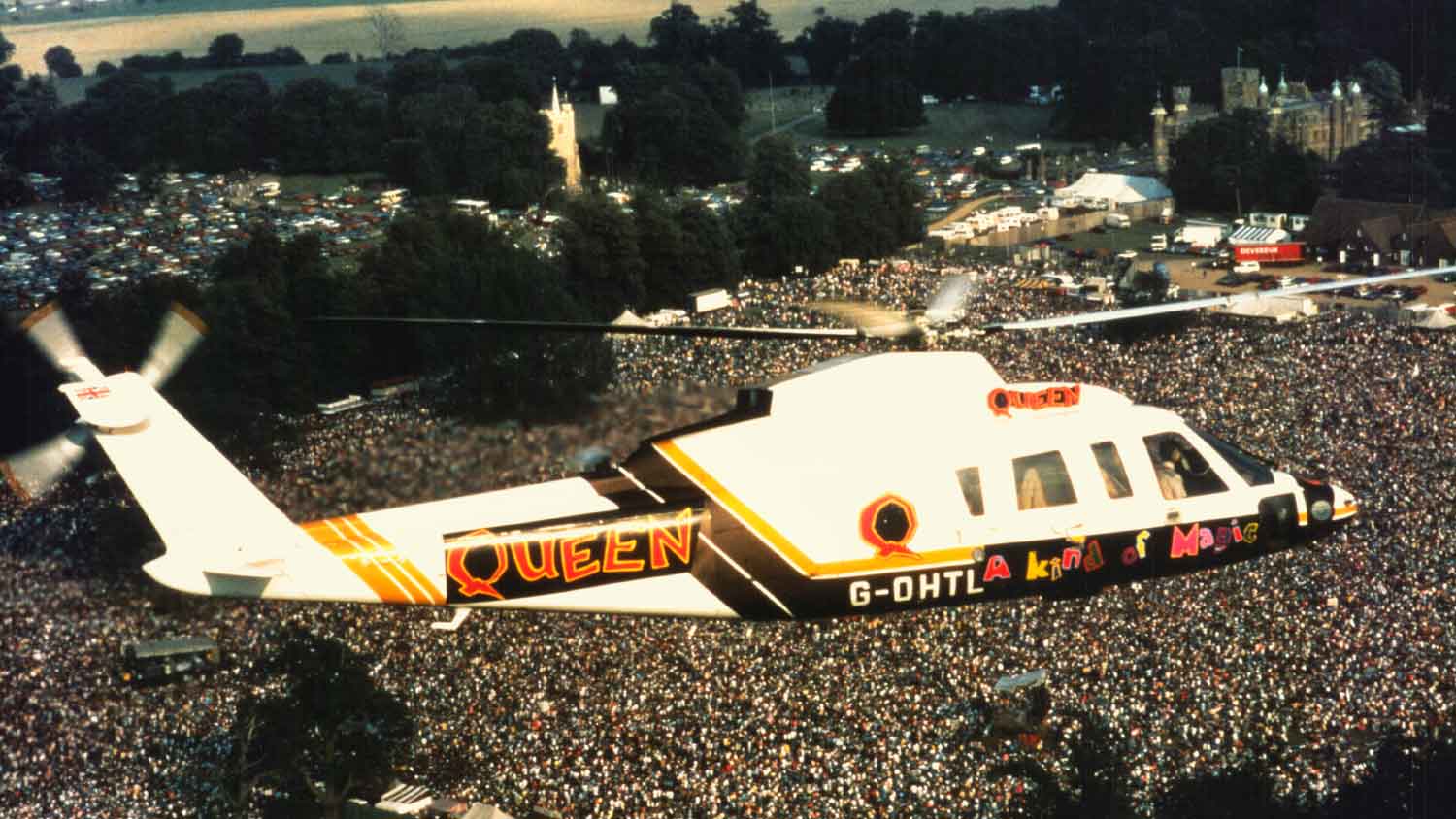
Flight Brief
- 250 helicopter movements were coordinated in a single day at Knebworth in 1990.
- Fifteen helicopters operated the shuttle, flying from a temporary airfield near Hemel Hempstead.
- The site became the first airfield in the UK to be licensed by the Civil Aviation Authority for night flying.
- The operation was formally commended by the CAA.
- It was Starflight Aviation's first year of trading. The company has operated continuously since.
- The same operating principles govern the movements Starflight arranges today, from music tours to sports squads and government delegations.
Thirty-five years of operations behind every quote. Tell us what you are planning.
Start an EnquiryMost companies do not begin with their hardest job. Starflight Aviation did. In 1990, in our first year of trading, we were asked to move an audience by air to a concert at Knebworth House, and to do it from a field that was not an airfield when the job was awarded.
The number people remember is 250. That is how many helicopter movements were flown in a single day. It is a large number in isolation, but the number on its own understates the problem. Two hundred and fifty movements means a landing or a departure roughly every three minutes across the operating day, with fifteen aircraft sharing the same patch of sky, the same ground crew and the same fuel supply, in front of an audience that had bought a ticket to be somewhere at a fixed time.
Building an airfield to a deadline
The shuttle operated from a temporary site near Hemel Hempstead. Choosing it was the first real decision, and it was not made on distance alone. A site for this kind of operation has to satisfy several things at once, most of which pull against each other.
- Approach and departure paths clear of obstructions, in more than one direction so the operation is not hostage to a wind shift
- Ground firm enough to take repeated landings without breaking up, in whatever weather arrives
- Space to hold, fuel and marshal fifteen aircraft without them queuing into each other
- Road access good enough to move passengers to and from the site at the rate the aircraft deliver them
- Far enough from housing to fly the hours the schedule demanded
That last point turned out to be the one that mattered most. The concert would not finish in daylight, and an audience that arrives by air expects to leave the same way. Flying the return legs meant flying after dark, and flying after dark from a temporary site meant something that had not been done before in this country.
The site became the first airfield in the United Kingdom to be licensed by the Civil Aviation Authority for night flying. Not the first temporary airfield, and not the first for an event. The first.
Why the licence was the hard part
Arranging fifteen helicopters is a procurement exercise. Getting a regulator to license a field for something it has never licensed a field for is a different kind of work, and it is the part of the story that gets left out when the number 250 is quoted on its own.
A night flying licence is not a form. It requires a case: lighting, approach and departure procedures, crew currency, ground handling, contingency arrangements for an aircraft that cannot depart, and a demonstration that every one of those holds up on the worst night rather than the best one. All of it had to be assembled, submitted and approved against a date on a poster that was never going to move.
The concert date was fixed the day the tickets went on sale. Everything else had to be built backwards from it.
Starflight AviationWhat 250 movements actually looks like
On the day, the operation ran as a shuttle rather than a schedule. Aircraft were turned rather than parked, passengers were marshalled in groups sized to the aircraft on approach rather than the aircraft that had been promised, and the ground team worked to a rolling sequence that absorbed delay instead of accumulating it.
This is the part that does not photograph well and is the reason the operation worked. Nothing about it was improvised. The margin was built in advance, and the day itself was mostly a matter of not spending it.
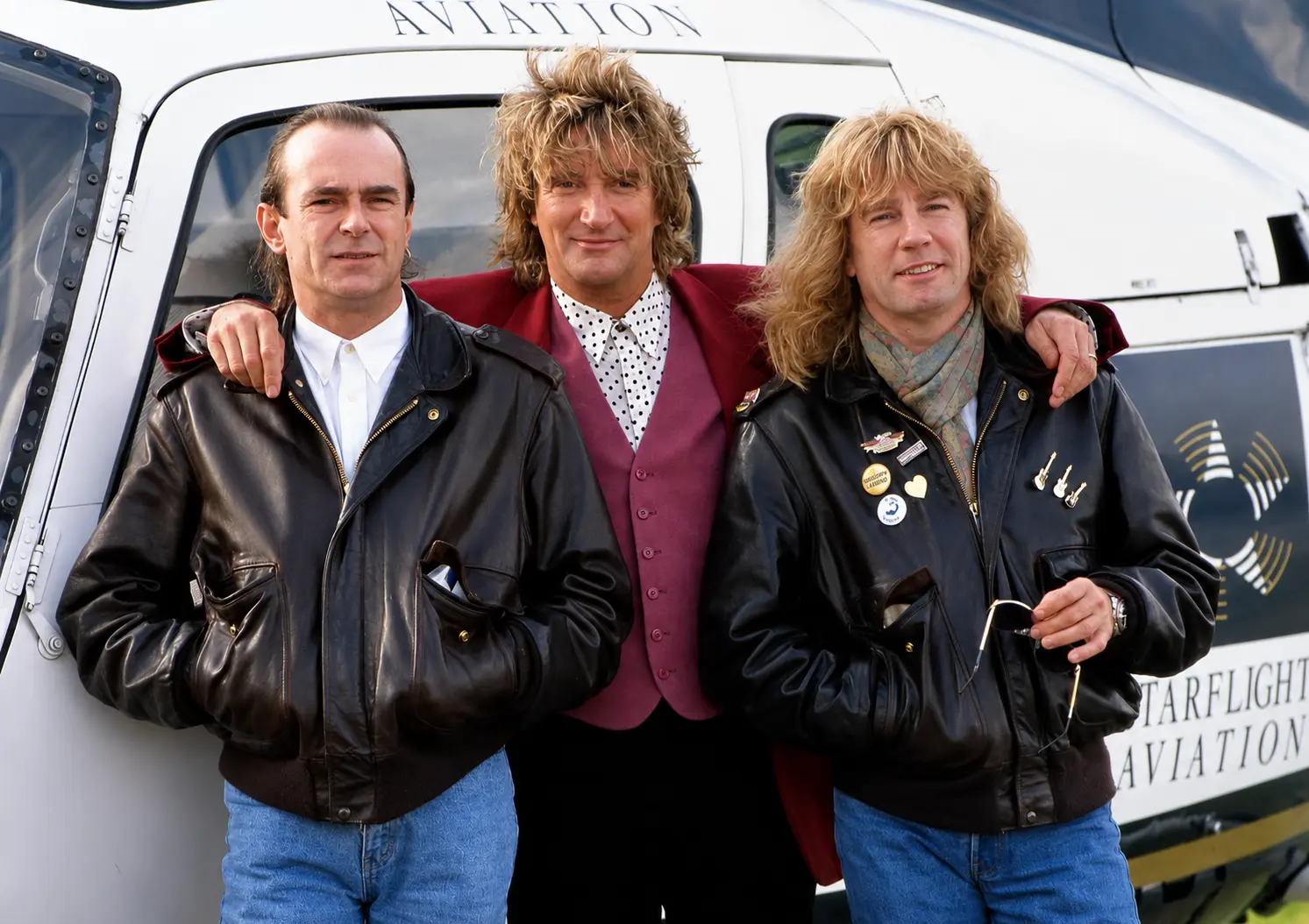
The Same Standard, Every Flight
Whether it is a single aircraft from Farnborough or a touring party across four countries, the method is the one we learned that year: work backwards from the fixed point and build the margin in advance.
The parts nobody sees
A temporary airfield is not just a landing area. To run 250 movements through one, several things have to exist that morning which did not exist the week before.
Fuel
Fifteen helicopters flying a continuous shuttle consume fuel faster than any single bowser can deliver it. Refuelling has to be planned as a rolling operation with its own schedule, its own safety zone and its own staff, sited far enough from the landing area that it does not constrain movements and close enough that aircraft are not spending airborne minutes reaching it. Run out of fuel at three in the afternoon and the operation stops, with an audience waiting.
Ground marshalling
Every aircraft on approach needs someone on the ground telling it where to put down, and every group of passengers needs to be at that spot when it does. With aircraft arriving every few minutes, the marshalling sequence is the actual bottleneck. It is also the part where a mistake is most expensive, because a helicopter turning with rotors running has no margin for a passenger walking the wrong way.
Communications
Fifteen aircraft, a ground team, a fuel crew and a passenger handling operation all need to hear the same instructions and be able to raise a problem instantly. That means a radio plan, allocated frequencies and a single person with authority to stop the operation. In 1990 that was done without mobile phones, without GPS and without any of the coordination tools a modern operation takes for granted.
Contingency
The question that decides whether an operation is professional or lucky is what happens when an aircraft cannot depart. A technical fault on a helicopter sitting in the landing area does not just remove one aircraft from the shuttle, it blocks the space the next one was going to use. Every one of those scenarios had to have an answer before the day began, because there is no time to invent one while 249 other movements are waiting.
What it has to do with a private jet in 2026
It is a fair question. Almost nothing about a single charter flight from Farnborough resembles a mass helicopter shuttle in a Hertfordshire field.
The connection is the working method rather than the aircraft. Knebworth forced a discipline that has stayed with the company: work backwards from the fixed point, build the margin in advance, and have an answer ready for every failure before it happens rather than after.
That is precisely what a complex movement needs today. When we move a touring party between show dates, a sports squad to a fixture, a film crew to a location or an executive team through a multi-city roadshow, the deadline is fixed in exactly the way a concert start time was fixed. A late aircraft does not simply inconvenience the passengers. It reaches the crew waiting at the venue, the security and catering teams, the hotels holding rooms and, on a large production, several hundred people whose own schedules depend on that arrival.
Anyone can book an aircraft. The work is in everything that has to be true before it lands.
That is also why we still arrange helicopter charter alongside private jets rather than treating it as a separate business. A helicopter leg into a festival site, a race meeting or a venue with no runway within reach is frequently the piece that makes an itinerary work at all, and it is a discipline we have practised since the company's first year.
What it still tells us
The Civil Aviation Authority formally commended the operation afterwards. Regulators do not hand those out for enthusiasm, and it remains a rare thing for a charter broker to hold.
Thirty-five years on, almost nothing about the industry looks the same. The aircraft are different, the regulations are heavier and most of the work now is a single aircraft rather than fifteen. What has not changed is the thing the CAA actually commended, which was not the flying. It was the planning that made the flying uneventful.
That is still the job. A charter that goes exactly as briefed looks effortless from the cabin, and that appearance is the entire product. Knebworth was the first time we had to prove it at scale, and it set the standard we have worked to since.
Starflight arranges helicopter charter across the UK and Europe, including event access, private landing sites and airport transfers. See helicopter charter, or read about our work with music and entertainment clients.